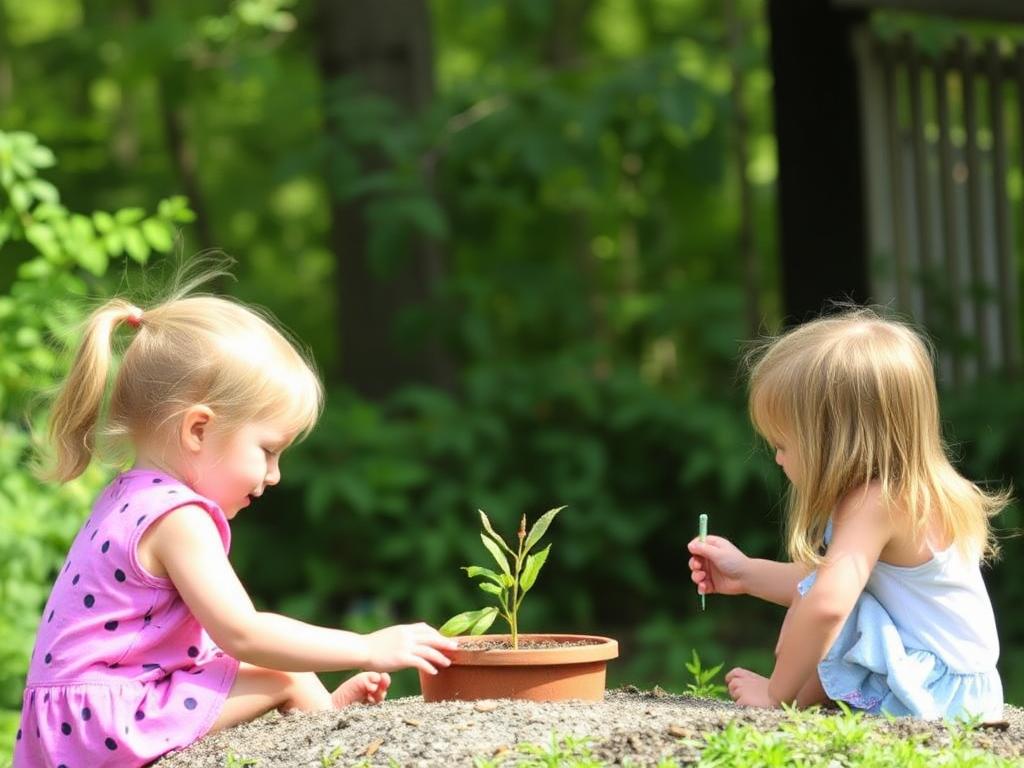
Helping children develop a love for the natural environment is a vital part of early learning. Not only does it support sensory, cognitive, and emotional development, but it also builds respect and responsibility towards nature. Below are a variety of engaging, play-based experiences that you can implement in an early childhood setting to encourage meaningful connections with the natural world.
Hands-On Nature-Based Experiences
🌿 Nature Scavenger Hunt
Create a list of items such as leaves, feathers, acorns, or rocks and invite children to find them. This promotes observation, focus, and curiosity while encouraging outdoor exploration.
🌱 Gardening Together
Allow children to plant and care for flowers, vegetables, or herbs. Gardening nurtures responsibility, patience, and an understanding of life cycles and food origins.
🧁 Mud Kitchen Play
Set up an outdoor “kitchen” with mud, pots, pans, and natural ingredients. This promotes sensory development, imaginative play, and connection to natural materials.
🍃 Leaf Rubbing Art
Place leaves under paper and have children rub crayons over them to reveal textures and patterns. This activity combines art with scientific observation.
🏡 Building Fairy or Bug Houses
Use twigs, bark, stones, and leaves to build homes for imaginary fairies or real insects. This promotes creativity and an understanding of how nature provides shelter and protection.
Creative & Reflective Nature Experiences
📓 Nature Journaling
Encourage children to draw or write about their time outdoors—what they see, hear, or feel. This fosters mindfulness, literacy, and reflection.
🌸 Exploring Flowers and Scents
Use petals and herbs in sensory play—make floral “tea”, explore scents, or create natural glitter. Children learn about textures, smells, and plant diversity.
🎨 Rock Painting
Invite children to collect and paint rocks, turning them into characters, patterns, or story prompts. This blends art with nature and can be used for storytelling or decoration.
🔎 Wildlife Spotting & Birdwatching
Provide binoculars or magnifiers and guide children in watching birds, bugs, or small animals. Recording sightings develops patience and a deeper appreciation for living things.
Outdoor Exploration & Learning
🌲 Forest Walks & Tree Identification
Take children on nature walks and teach them to recognise local trees, leaves, and bark. Introduce terms like “eucalyptus”, “gum nuts”, or “wattle”.
🐛 Building Bug Hotels
Construct small shelters using sticks, leaves, and bark to attract insects. This teaches about micro-habitats, biodiversity, and sustainability.
☁️ Weather Observation & Cloud Watching
Invite children to lie on the grass and observe the sky. Discuss different cloud shapes and weather patterns, or track weather changes over the week.
🧘 Outdoor Yoga & Mindfulness
Guide children through gentle yoga poses or breathing exercises in nature. This promotes calmness and strengthens their emotional connection to the environment.
Creative Sustainability & Eco Projects
🌀 Nature Mandalas
Using leaves, petals, pebbles, and sticks, children can design circular mandalas. This encourages mindfulness, symmetry, and appreciation of natural aesthetics.
🎨 Eco-Friendly Art Projects
Make use of recycled paper, clay, pressed leaves, and bark in art activities. This reinforces ideas about waste reduction and the reuse of materials.
🧪 Outdoor Science Experiments
Simple experiments—like observing how plants absorb coloured water or watching how soil retains moisture—build scientific curiosity through nature.
🌊 Nature-Themed Sensory Bins
Fill trays or tubs with natural materials like sand, water, leaves, and stones. These support sensory development and open-ended exploration.
Bringing It All Together
By offering these types of experiences regularly, educators can:
-
Embed sustainability and environmental awareness into everyday practice.
-
Support learning outcomes related to identity, wellbeing, and connection to the world, as outlined in the Early Years Learning Framework (EYLF).
-
Foster lifelong respect for and engagement with the natural world.