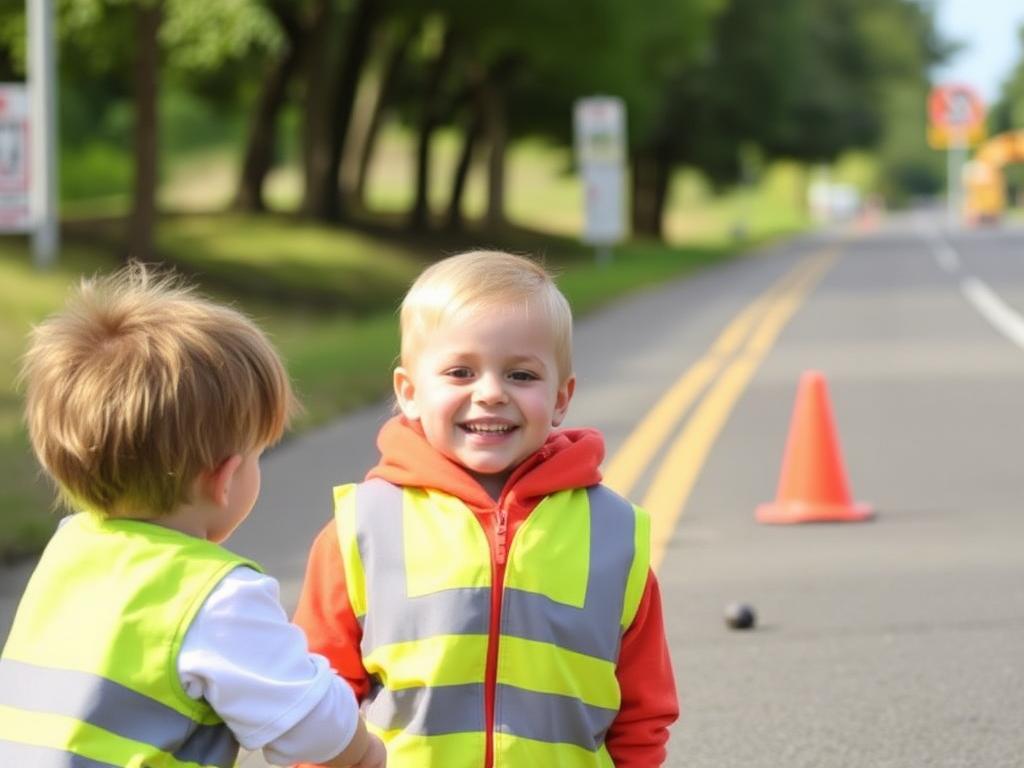
One of the most important life skills we can teach young children is how to be safe around roads. Road safety awareness helps reduce the risk of injury and empowers children with the knowledge and behaviours needed to stay safe as pedestrians, passengers, and future road users.
This guide covers:
-
Road Safety Skills for Children
-
Teaching Road Safety Rules
-
Fun Road Safety Experiences
-
Songs and Rhymes
-
National Practices in Early Childhood Education
Understanding Child Development and Road Safety
Children’s abilities to stay safe around roads are shaped by their cognitive, social/emotional, and physical development:
Cognitive Development
Young children are:
-
Curious and eager to explore
-
Still developing the concept of ‘danger’
-
Learning to judge speed, distance, and direction
-
Easily distracted and may focus only on what interests them
They may also:
-
Repeat safety phrases without truly understanding them
-
Struggle to interpret visual and auditory cues accurately
Social and Emotional Development
Children:
-
Are highly social and like to be “where the action is”
-
Vary in temperament and understanding
-
May want to act independently without the skills to do so safely
Physical Development
Children:
-
Move quickly and can dart into danger
-
Are small and not easily seen by drivers
-
Have slower reflexes and limited ability to stop quickly
Teaching Road Safety Skills
For Children Under 5
-
Talk about traffic, signs, and roads during daily walks.
-
Always hold hands near traffic.
-
Explain your own behaviours—“We’re stopping here to look both ways.”
-
Role model road safety consistently.
For Children Aged 5–9
-
Teach the Stop, Look, Listen, Think process.
-
Explore pedestrian crossings, traffic lights, and safe walking paths.
-
Supervise their journeys to and from school.
-
Reinforce safety behaviours using everyday scenarios.
Fun Road Safety Experiences for Children
-
Toy Car Olympics: Let children race toy cars and talk about how fast vehicles move and how quickly they need to stop.
-
Create a Giant Road Map: Build a pretend town with roads and paths. Sort vehicles and people into the correct spaces.
-
Wheel Play: Spin toy car wheels or make dough wheels. Discuss how wheels help vehicles move fast—faster than people.
-
Seatbelt Experiment: Use teddies in toy cars—one with a ribbon seatbelt and one without. Show what happens when they roll down a ramp.
-
Sound Matching Game: Match recorded road sounds (fire trucks, car horns) with images and talk about their meanings.
-
Hi-Vis Play: Use torches in a darkened room to show how reflective clothing helps us stay visible.
Songs and Rhymes for Road Safety
🎵 I’m a Little Seatbelt (to the tune of I’m a Little Teapot)
I’m a little seatbelt in the car,
Before we go driving near or far…
🎵 Traffic Light (to the tune of Twinkle Twinkle)
Twinkle twinkle traffic light,
Red means stop and green means go…
🎵 When We’re Walking (to the tune of Rain is Falling Down)
Hold a grown-up’s hand…
When we walk across the road…
🎵 Everybody Click-Clack
Everybody click-clack, click-clack…
In the car!
These tunes reinforce habits through repetition and fun.
National Practices for Early Childhood Road Safety Education
The National Practices provide a framework for early childhood educators in Australia and New Zealand. They align with the Early Years Learning Framework (EYLF):
-
Holistic Approaches – Address road safety across learning areas.
-
Responsiveness to Children – Tailor lessons to the child’s developmental level.
-
Learning Through Play – Integrate road safety into playful learning.
-
Intentional Teaching – Guide children’s understanding with purpose.
-
Learning Environments – Include safe, real-world experiences.
-
Cultural Competence – Reflect diverse families and community experiences.
-
Continuity of Learning – Reinforce safety during transitions.
-
Assessment for Learning – Monitor and build on children’s road safety knowledge.
Explore the National Practices:
National Practices for Early Childhood Road Safety Education (Transport NSW)
Additional Resources
-
Kids and Traffic – Free posters, eBooks, safety puzzles: kidsandtraffic.mq.edu.au
-
Transport for NSW – Lesson plans and parent resources: roadsafety.transport.nsw.gov.au
-
Early Childhood Road Safety Education and Safe Transport Policy
Teaching children about road safety from an early age helps develop long-term awareness and habits. Through fun, structured, and responsive approaches, educators and families can work together to keep young children safe on and around roads.