Little Hands, Big Moves: Simple Fine Motor Play for All Families
Early child development plays a vital role in shaping a child’s growth, and at First Foundation Preschool, we know that life with little ones can feel like a whirlwind. Between the school run, grocery trips, and weekend sport, finding time for “educational activities” can feel like just another thing on the To-Do list.
The good news? Developing fine motor skills for children doesn’t require expensive kits or hours of prep at the kitchen table. In fact, some of the best ways to get those little hands moving happen during the bits and pieces of your everyday routine. And these little movements become a stepping stone for them to begin doing their things by themselves.
Whether you’re raising a tiny bub or a preschooler getting ready for big school, here is how you can support their development on the go.
Why Fine Motor Skills Matter
When we talk about fine motor skills, we’re talking about the small muscles in the hands, fingers, and wrists. While they might seem like small movements, they are the building blocks for independence. Our approach focuses on supporting child development in preschool through meaningful and engaging activities.
Stronger hand muscles mean your child will eventually be able to:
-
Master the lunchbox: Opening snack packets and containers at kindy.
-
Get dressed solo: Managing zips on jackets, buttons on shirts, and those tricky Velcro straps on sneakers.
-
Tool time: Using cutlery properly at dinner and holding pencils or crayons with control.
-
Hand-eye coordination: Everything from stacking blocks to catching a ball at the park.
While these skills are particularly vital for the 3 to 6-year-old age bracket as they prepare for school, the foundation starts from day one. Parents need to start working on it from the very beginning.
Play-Based Ideas for Busy Days
Fine motor play doesn’t need to be fancy—learning through play can happen in simple, everyday moments. Here are a few “Aussie lifestyle” ways to sneak in some practice:
-
The “Peg the Wash” Challenge: Next time you’re hanging the laundry, give your toddler a small basket of pegs. Squeezing them open is one of the best ways to build the “pincer grip” needed for writing.
-
Park Finds: While at the local park, encourage your child to pick up “treasures” like gumnuts, small pebbles, or fallen leaves. Sorting them into different piles is great for finger dexterity.
-
The Morning Tea Helper: Let them help peel a mandarin or a hard-boiled egg. It’s fiddly work that requires focus and precision (and it makes the snack taste better!).
-
Cafe Quiet Time: If you’re grabbing a coffee, ask for an extra cup and some stirrers. Pushing the stirrers through the small hole in a takeaway lid is a fantastic “on the go” activity that keeps them occupied and learning.
Our Approach at First Foundation
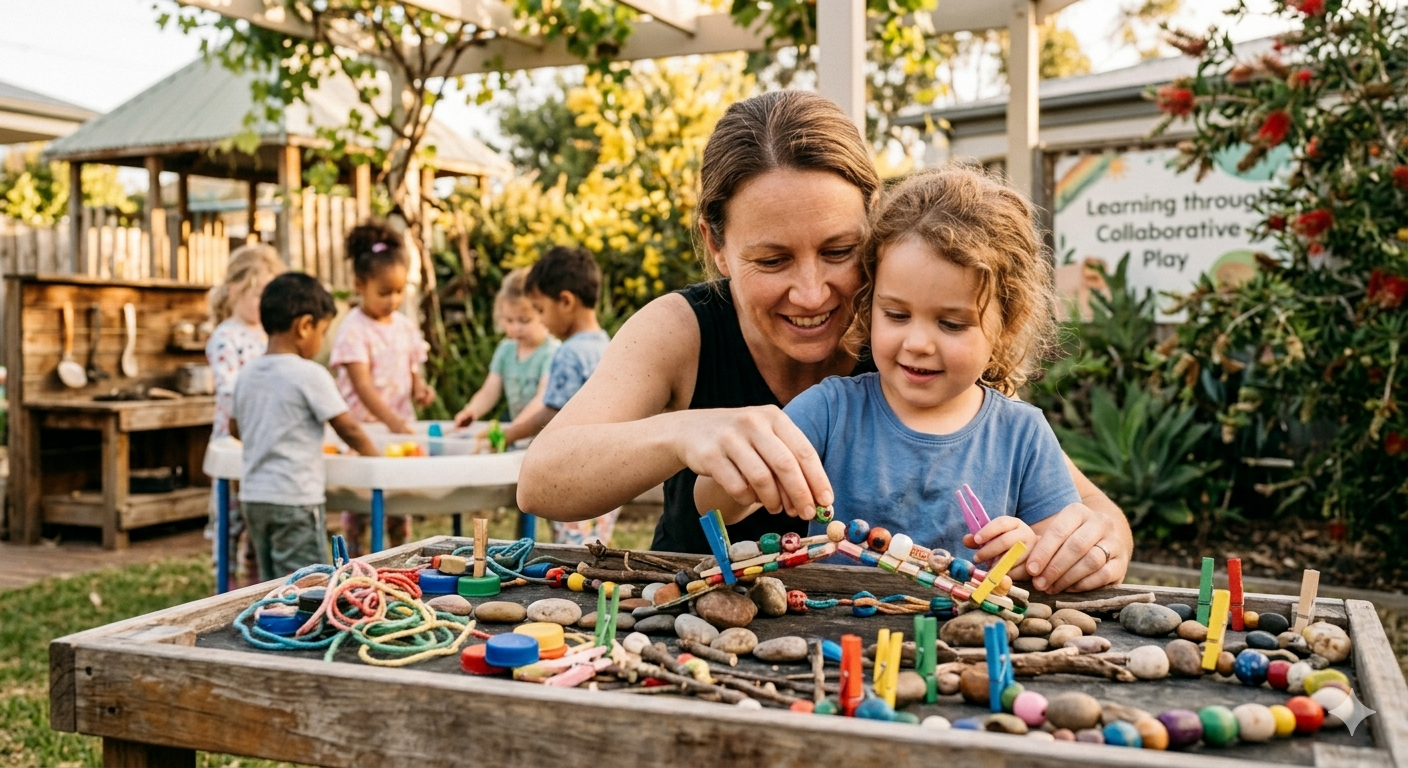
At First Foundation Preschool, we believe that children learn best when they don’t even realise they’re working. Our environment is designed to encourage “heavy work” for little fingers—from messy play and playdough to threading beads and outdoor exploration.
Our approach focuses on learning through play, supporting early child development in a natural and engaging way.
Helping your child develop these skills isn’t about being perfect; it’s about giving them the confidence to say, “I can do it myself!” This confidence is what’s going to help them in long run, when they are old enough to do their things own their own.
Do you have a favourite way to keep little hands busy? We’d love to hear about it next time you’re at the centre!