30 Fun and Easy Group Games Preschool Kids Enjoy Together
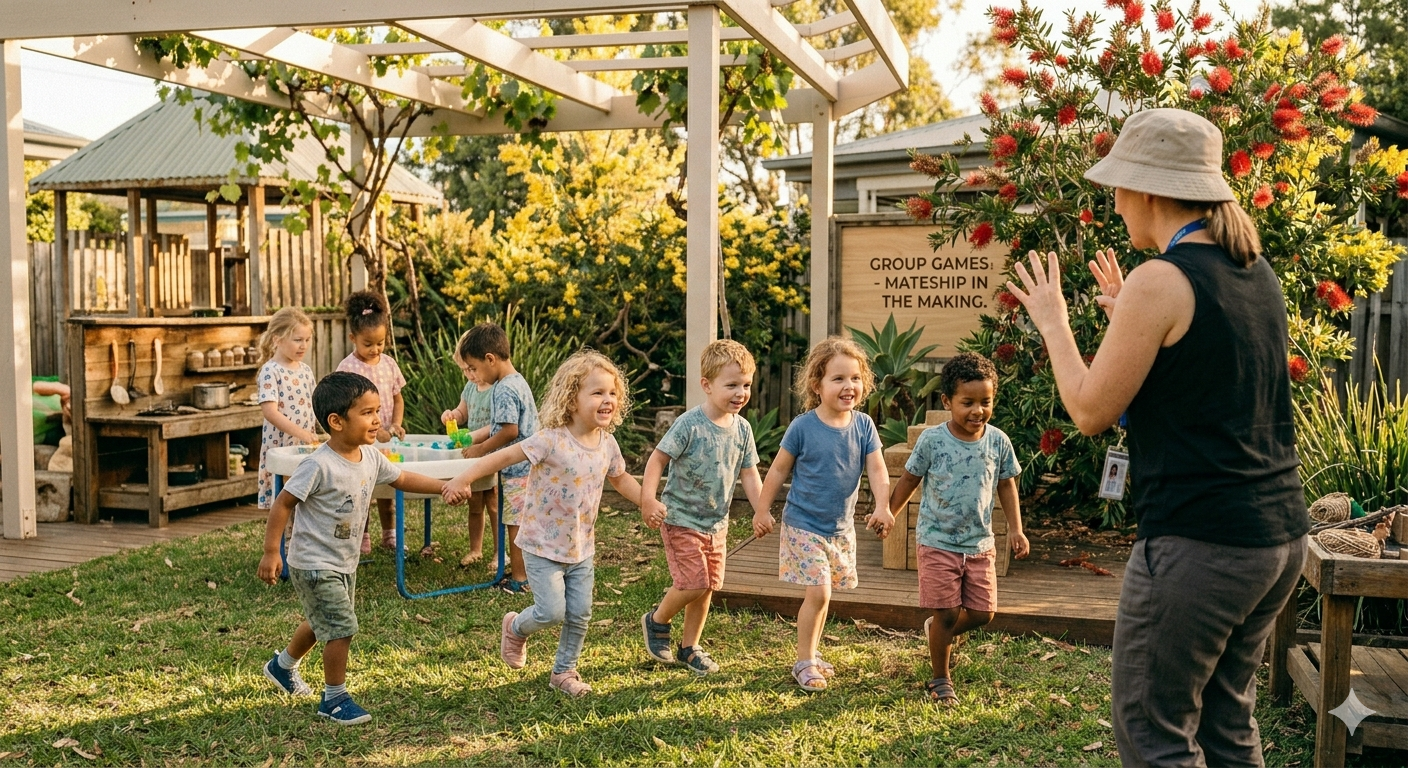
At First Foundation Preschool, we see it every day: magic happens when children play together. Group games for preschool kids aren’t just about having a laugh (though there’s plenty of that!); they’re the secret sauce for building social skills, cooperation, and the confidence to have a go. These games are a good way of learning through play for kids.
Whether your little one is just starting to find their feet or they’re getting ready to head off to “big school,” these 30 tried-and-true favourites are perfect for the backyard, the park, or the loungeroom on a rainy arvo.
These are the “oldies but goodies” that every Aussie kid should have in their toolkit. They’re brilliant for teaching children how to follow instructions while getting their wiggles out.
These indoor games for preschool kids are perfect for building coordination, listening skills, and group participation in a fun way:
-
What’s the Time, Mr Wolf? – A timeless chasing game that builds counting skills and keeps everyone on their toes.
-
Duck, Duck, Goose – Perfect for turn-taking and practicing those quick-off-the-mark reactions.
-
Musical Statues – Crank up the tunes! Great for developing “stop-start” self-control.
-
Ring-a-Ring o’ Roses – A sweet circle game for the younger ones (0-3) involving singing and a big “all fall down” at the end.
-
Red Light, Green Light – A backyard staple that teaches kids to listen and control their movements.
Better Together: Circle & Cooperation Games – These games are all about the group dynamic. They help children learn that sometimes, we need our mates to get the job done!
These indoor games for preschool focus on teamwork and promote learning through play, making group activities more meaningful:
-
Pass the Ball – Like hot potato, but gentler. Stop the music and see who’s holding the “prize.”
-
Fruit Salad – Give everyone a fruit name (mangoes, bananas, kiwis). When the leader calls “Fruit Salad!”, everyone swaps seats!
-
Parachute Play – Grab a sheet or a play parachute. Lifting, shaking, and bouncing balls together is pure joy.
-
Follow the Leader – Let one child lead the “expedition” around the garden while everyone else copies their silly walks.
-
Hot Potato – High energy and heaps of giggles. Pass an object quickly before the music stops.
Outdoor Energy Burners – Perfect for the local park or a run-around on the grass. Don’t forget the hats and sunscreen!
These outdoor games for preschool kids are great for active play, helping kids burn energy while improving coordination and teamwork:
-
Stuck in the Mud – A classic tag game. If you’re caught, you’re “stuck” until a mate crawls through your legs to free you.
-
Shadow Tag – A clever twist! Instead of tagging bodies, you have to step on your friend’s shadow.
-
Treasure Hunt – Hide some “dinosaur eggs” (painted rocks) or gumnuts around the yard for a team search.
-
Aussie Animal Races – Hop like kangaroos, waddle like emus, or scuttle like crabs.
-
Mini Relay Races – Keep it simple with a baton or a spoon-and-egg race (use a plastic egg to save the mess!).
Using Our Imaginations (Dramatic Play) – For the 4-to-6-year-olds, these games allow them to step into a different world.
These creative activities encourage imagination and role play among young children:
-
Sleeping Lions – Everyone lies dead still. The “hunter” has to try and make them giggle or move without touching them.
-
Statue Maker – One child is the “artist” who poses their mates into the funniest statues imaginable.
-
Simon Says – The ultimate listening test. “Simon says… jump like a wallaby!”
-
Magic Carpet Ride – Use a rug or a towel. The kids sit on it and “fly” to the beach, the moon, or the bush.
-
Pretend Journey – Act out a trip to the Australia Zoo or a day at the Great Barrier Reef using group movements.
Guessing & Brain Power – These are fantastic for “quiet time” or when you need to settle the group down before lunch.
These calm and engaging activities are perfect for helping children focus and think together and it encourages learning through play:
-
Who Stole the Cookie? – A rhythmic chant that’s great for memory and group participation.
-
Doggy, Doggy, Where’s Your Bone? – One child hides their eyes while a “sneaky pup” hides the bone behind their back.
-
Ponchanello Little Fellow – A playful call-and-response singing game that lets every child have their moment in the spotlight.
-
Button, Button, Who’s Got the Button? – A classic “guess who” game that requires a keen eye.
-
Hide the Thimble – Hide a small object in plain sight and see who spots it first without giving it away.
-
Who’s Missing? – Have one child hide while everyone else has their eyes closed. Can they guess who’s gone?
-
Guess the Leader – One child secretly starts a movement (like clapping) and everyone follows. The “guesser” has to find the leader.
-
Farmer in the Dell – A singing circle game where roles are chosen—perfect for practicing social choices.
-
Kitty Wants a Corner – A game of strategy and quick swaps.
-
Who Called My Name? – Guessing a friend’s voice while your eyes are closed. It’s harder than it sounds!
Note – When you’re running these games, remember the “First Foundation” philosophy:
-
Keep it Fresh: Swap games in and out so they don’t get bored.
-
Keep it Simple: If a rule is too tricky, ditch it! The goal is participation, not perfection.
-
Celebrate the Effort: In the preschool years, we focus on the fun of the game rather than who “won.” We’re all winners when we play fair.
Which of these was your favourite growing up? Do you have a favorite way to keep little hands busy? We’d love to hear about it next time you’re at the center!
Looking for a preschool that encourages learning through play and fun group activities? Explore our programs to see how we support early childhood development.
This article includes insights from Aussie Childcare Network, a trusted resource for early childhood education.